Commercial rooftop
Ask where the inverter sits, which AC voltage the building uses, and whether shading makes module-level conversion worth a separate line. The RFQ unit is usually the inverter, not the module pallet.
Application translation
Solar inverter manufacturers can price a request only after the application is translated into electrical and commercial fields. CurrentWorks Procurement writes that translation with the buyer. It does not pick an architecture or claim that one factory already fits the site.
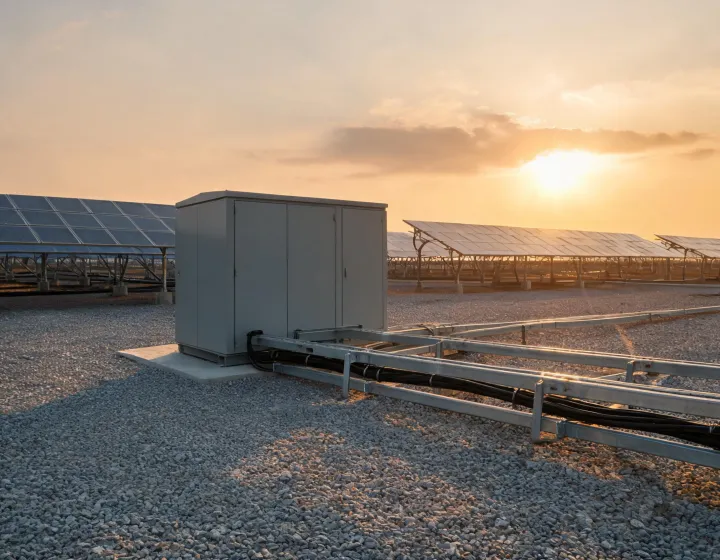
Ask where the inverter sits, which AC voltage the building uses, and whether shading makes module-level conversion worth a separate line. The RFQ unit is usually the inverter, not the module pallet.
Ask whether the buyer wants fewer larger units or many string units. Record DC collection, pad environment, and who reviews the outline drawing. Do not treat a megawatt label as a layout.
Space for equipment is often tight. Ask about phase, monitoring per canopy, and enclosure exposure. A fleet-charging load is a different brief unless the buyer joins the two on purpose.
If a battery is in the project, ask whether coupling is AC-side or DC-side and which controls already exist. An inverter-only quote should say that storage is excluded.
Grid voltage, phase, and communication protocol belong here. Indoor heat and service clearance are questions for the drawing, not assumptions from a datasheet photo.
Central or string equipment can reduce the number of power-conversion units on a large block and can simplify some collection layouts. Module-level conversion can support per-module operation and monitoring where shade, service access, or mixed orientations matter. Neither side is selected by this desk. Write the site condition, then ask solar inverter manufacturers to quote the architecture you named and to flag a substitute.
A low unit price can reduce acquisition cost when accessories, freight, taxes, warranty, and documents truly match. A delivered-scope comparison can show omitted gateways, DC disconnects, or a warranty that starts on a different date. Compare those columns before you rank factories. CurrentWorks Procurement does not publish a percentage saving.
Rated power, voltage, current, and efficiency are confirmed for the quoted configuration, with the test basis written beside any efficiency figure. Operating temperature and enclosure notes are requested the same way. Quantity uses units, systems, or a project lot. These names are the fields to fill, not values this site has measured on a product.
An illustrative rooftop brief might request 80 kW rated AC power, 5 independent MPPT channels, and 480 V three-phase. The engineer supplies the array configuration; the manufacturer confirms maximum DC voltage, operating and short-circuit current limits per MPPT, strings per channel, enclosure rating, and temperature derating from the proposed-model documents. A site protocol requires its interface and supported firmware, not a generic “monitoring compatible” label. Grid-forming operation and AC- or DC-coupled storage need explicit equipment and controls scope. These fields are unresolved requirements, not a validated design.
For a document review, record the manufacturer, model, datasheet revision, each requested value, each quoted value, and the responsible reviewer. Flag mismatches before any sample or pilot is commissioned. Agree its conditions, method, and acceptance record with the engineer and supplier; this desk does not energize or test equipment. The Department of Energy architecture overview provides context, not approval. Compare alternative architectures using the same quantity, destination, accessories, installation boundary, and warranty. Add an optional budget in a named currency and per-unit or whole-order basis, with premium, mid-range, budget-friendly, or undecided preference stated as buyer priorities.
Read the buyer brief and then choose an inquiry label only as a starting point. The label does not replace the application paragraph.
Application plus the electrical interface the quote must echo.
One unit of measure for the inverter line.
What is shipped, what is taxed, and what is left out.
Model-specific files requested after the application is clear.
Write the project use, the ratings you already know, the quantity, and the US destination. Leave unknown MPPT counts, protocols, and listing files marked open so each manufacturer answers the same gaps.
Eligibility applies to qualified business buyers and is confirmed after we review your product, quantity, destination, and sourcing requirements.